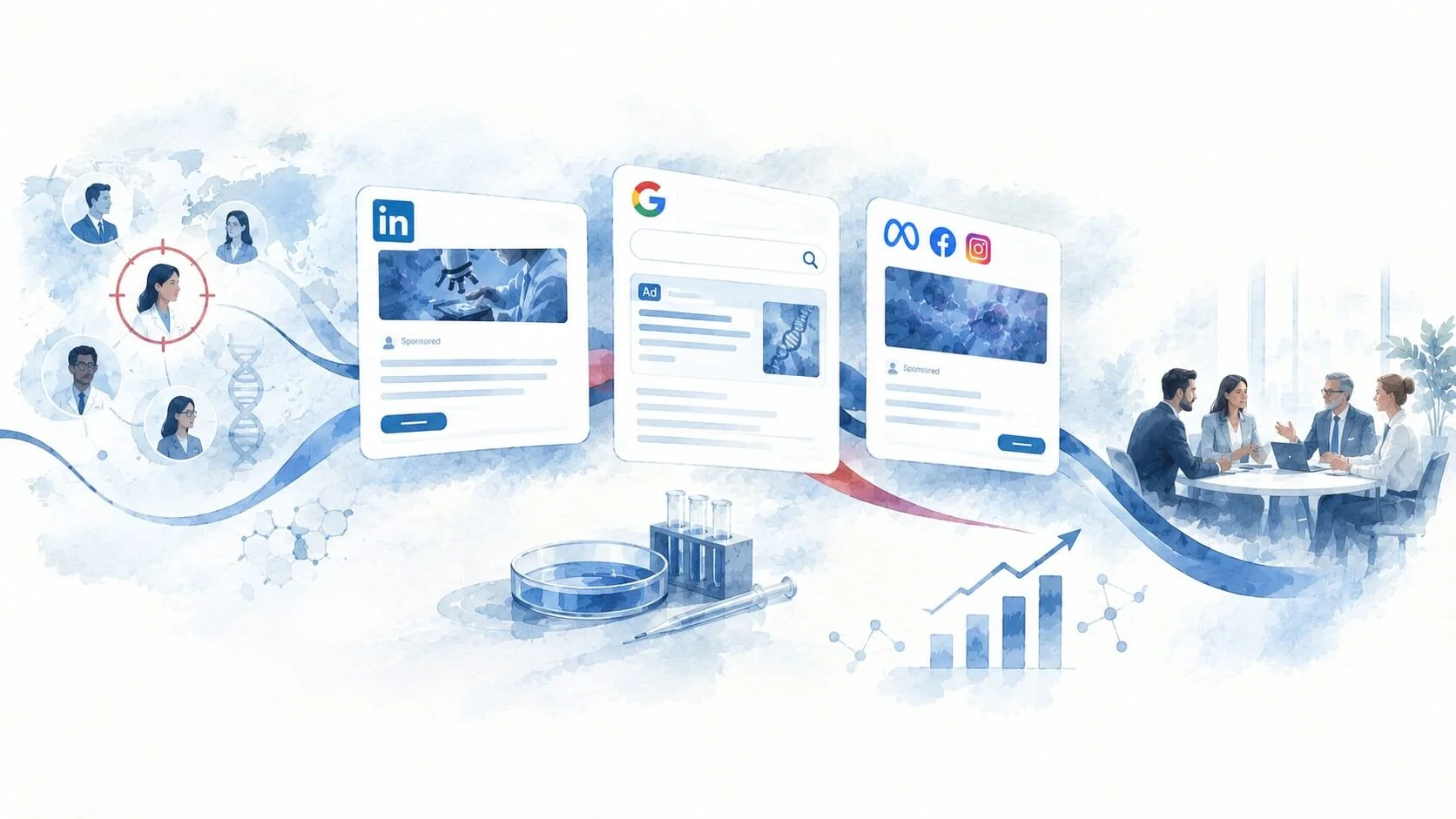
How life science companies generate leads
Generating leads in the life sciences is fundamentally different from generating leads in most other industries.
Biotech companies, contract research organisations, pharmaceutical suppliers and medtech manufacturers rarely sell impulse purchases. Their products and services often represent significant scientific investments, evaluated carefully by highly specialised professionals.
Because of this, lead generation must focus on education, credibility and long-term engagement rather than short-term conversions.
Table of contents
Visibility at the research stage
Most life science purchasing journeys begin with research.
Scientists exploring new technologies often search for experimental methods, application examples or emerging scientific approaches. During this stage, they are not yet evaluating suppliers. They are trying to understand the landscape.
Companies that provide useful educational resources during this phase position themselves as trusted sources of information.
Technical blog articles, webinars and application notes allow organisations to support researchers as they explore new methodologies. When the time comes to evaluate suppliers, these companies are already familiar.
Educational content as a lead engine
Educational content plays a central role in lead generation for life science companies.
Researchers appreciate resources that help them solve practical challenges in their work. Articles explaining experimental approaches, detailed application notes or webinars exploring emerging technologies provide genuine value.
When companies offer deeper resources such as white papers, technical guides or specialised webinars, researchers are often willing to share their contact details in exchange.
These resources become powerful lead generation mechanisms while simultaneously strengthening the company’s reputation for expertise.
Conferences and scientific events
Despite the growth of digital marketing, scientific conferences remain vital environments for generating leads.
Researchers attend conferences not only to present their work but also to discover new technologies and potential collaborators. Conversations at booths, poster sessions and workshops frequently lead to new opportunities.
However, conferences are most effective when integrated with digital strategies.
Researchers who already recognise a company from online content are far more likely to engage in meaningful discussions at events.
Nurturing long buying cycles
Once a potential lead has expressed interest, the relationship rarely progresses immediately to a purchase decision.
Researchers may continue evaluating technologies for months before selecting a partner. During this time, companies must remain visible and helpful.
Regularly sharing relevant insights, case studies and research updates allows organisations to maintain engagement while prospects move through the decision process.
This nurturing approach ensures that when the time comes to make a decision, the company remains top of mind.
Conclusion
Lead generation in the life sciences is not about rapid conversion.
It is about building relationships with researchers and organisations that may eventually require your expertise or technology.
Companies that consistently provide valuable information and remain visible throughout the research process create a steady pipeline of qualified opportunities.
In an industry driven by knowledge and credibility, educational marketing becomes the foundation of sustainable lead generation.
Questions or need guidance? Send us a message, we’re happy to help!
Any questions about life sciences marketing?
Let's talk!
Frequently asked questions about how life science companies generate leads
How do life science companies generate leads?
Life science companies generate leads by focusing on educational content, scientific credibility, and long-term engagement. They attract researchers through technical articles, webinars, tradeshows, application notes, and white papers that provide real value during the research phase.
Why is content marketing important for lead generation in life sciences?
Content marketing is essential because researchers actively search for scientific information, methodologies, and applications before engaging with suppliers. High-quality content helps companies become trusted sources early in the decision-making process, increasing the likelihood of future engagement.
What types of content generate the most leads in life sciences?
The most effective content includes application notes, technical blogs, white papers, case studies, and webinars. These formats provide practical insights and deeper knowledge, encouraging researchers to exchange their contact details for access to valuable resources.
How important are conferences for life science lead generation?
Scientific conferences remain highly important because they enable direct interaction with researchers and decision-makers. When combined with digital marketing, conferences become even more effective, as attendees are more likely to engage with companies they already recognise.
How can life science companies nurture leads over long buying cycles?
Companies nurture leads by consistently sharing relevant insights, case studies, and research updates. This ongoing communication helps maintain visibility and trust while prospects evaluate options, ensuring the company remains top of mind when a decision is made.